 contact@nxhdmfg.com
 +86 352 5330772
 +86 180 3528 0246

Almost every sheet metal assembly is held together by one of two things: a rivet or a screw. The choice is normally made once, early in the project, and then copied onto every drawing that follows. That is why it is worth getting right — the two fasteners fail in different ways, need different tooling, and carry very different installed costs once assembly labour is counted. This guide compares them on the dimensions that actually decide the outcome.
What each fastener actually does
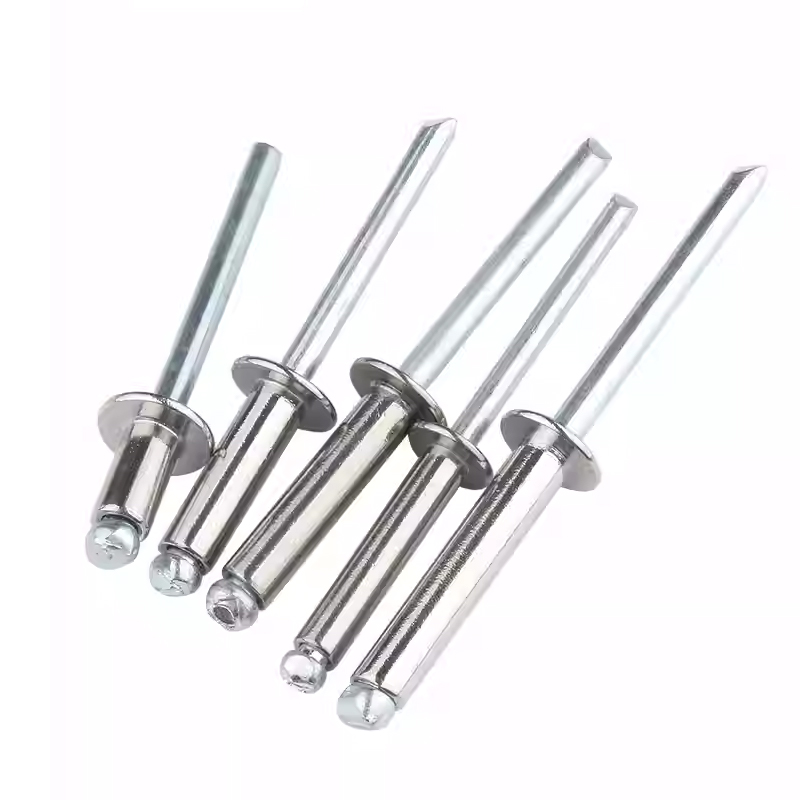
Blind rivets — also called break-stem or pop rivets — are installed from one side of the work only. A mandrel is pulled through the rivet body, expanding the blind-side tail so it clamps the sheets together, and then snaps off at a pre-set break load. The result is a permanent joint that needs access to one face only, which makes closed box sections, tube and enclosed frames practical to assemble.buyer's guide to self-tapping screws for light-gauge steel covers how to select one for thin sheet.
Grip range is the constraint that catches people out
For rivets, the single most common specification error is the grip range. A blind rivet only sets correctly within a defined range of total material thickness — too thin and the body buckles or the joint stays loose, too thick and the tail cannot expand properly. Where a joint stacks several sheets, the drawing should state the expected total stack and the supplier should confirm the body length covers it.
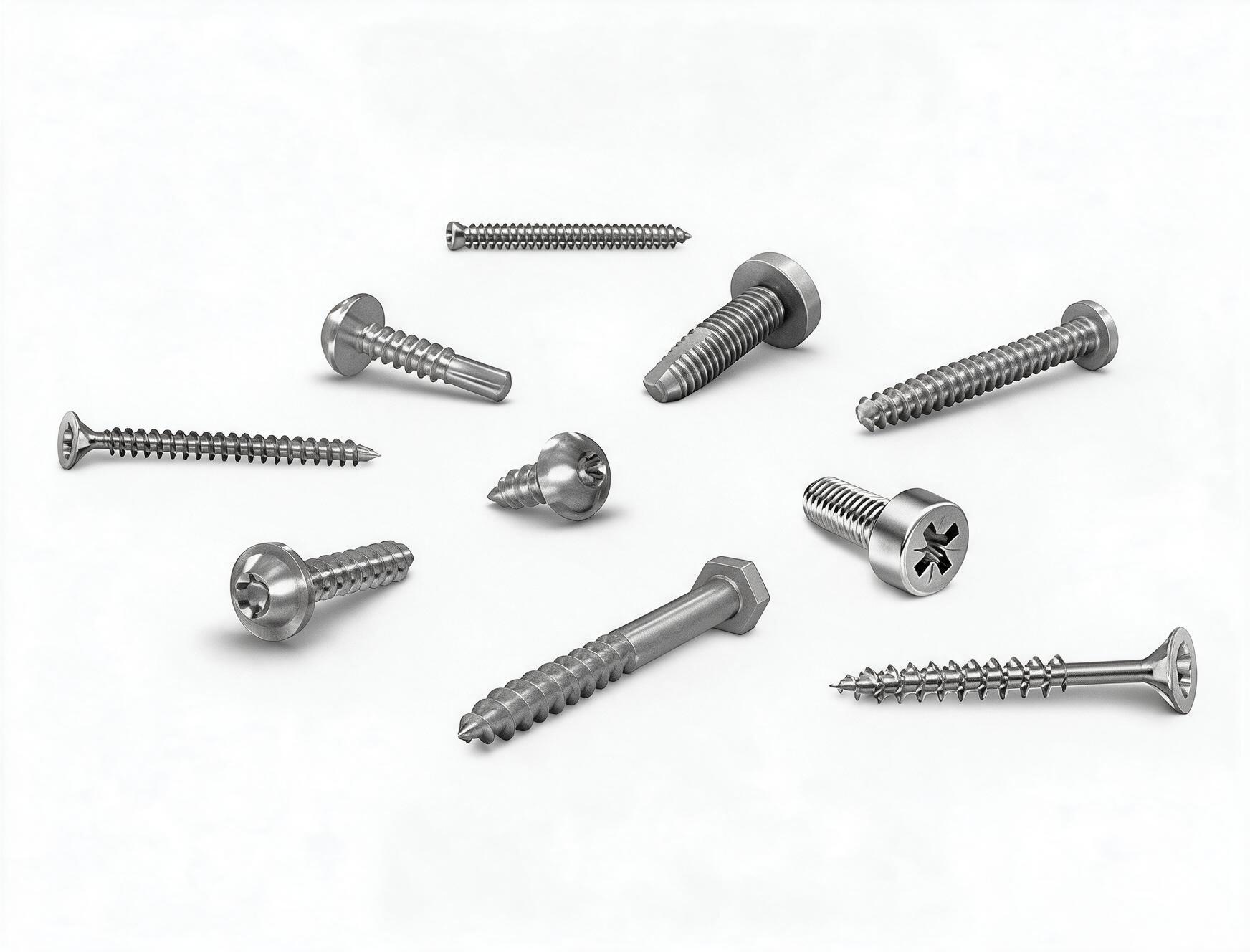
For self-tapping screws the equivalent constraints are sheet thickness and point geometry. A screw intended for thin gauge may strip if the sheet is too thick; one intended for heavier gauge may not form a thread at all in very thin material. Point type, thread pitch and minor diameter all have to match the application, and the sheet's tensile strength matters as much as its thickness — the same screw behaves differently in mild steel, stainless and aluminium.
Material pairing deserves attention too. An aluminium rivet body with a stainless mandrel, or a zinc-plated screw in a stainless sheet, creates a galvanic couple that corrodes faster in wet or marine service. Where that risk exists, specify a single material system or an isolating coating; our comparison of zinc, hot-dip galvanizing and zinc-flake coatings covers how the common finishes behave.
Hole size and installation repeatability
Hole diameter is specified far less carefully than it deserves to be, and it drives most field failures in both fastener types. A rivet in an oversized hole cannot clamp the sheets tightly and the joint moves under load; in an undersized hole it will not enter without distorting the sheet. A self-tapping screw in an oversized pilot hole strips out; in an undersized hole it distorts the panel and the thread form is incomplete.
Two other variables belong in the work instruction. Hole position tolerance matters because both sheets must line up within the fastener's clearance, and tolerances stack quickly in a multi-part assembly. Setting force or torque matters because an under-set rivet is loose and an over-set one can crack the sheet, while an over-torqued screw in thin gauge spins and destroys its own thread.
Cost per joint, not cost per piece
Rivets almost always win on piece price, and that comparison is usually the wrong one. The number that matters is the installed cost of the joint.
A self-tapping screw can eliminate an entire process step — no pre-drilled hole, no separate fastening operation, and in the case of a self-drilling screw, no drill at all. On a line producing thousands of joints a shift, removing one operation is frequently worth far more than the price difference on the fastener. Against that, a screw joint needs torque control, may need a locking feature, and is more likely to be reworked. A rivet installs faster, but removal is destructive, so any joint that might need service becomes a rework cost.
The correct comparison is total assembly cost divided by the number of joints, with rework and service access included. That is the same logic that decides whether a joint needs a catalogue fastener at all — the reasoning set out in our guide to standard versus non-standard fasteners, where a slightly more expensive part that removes an assembly step beats a cheaper one that adds one.
Where the specification usually goes wrong
Three mistakes recur. The first is transferring a rivet specification onto a joint that later became serviceable, so a panel designed as permanent now has to be opened in the field. The second is copying a screw specification onto thinner material than it was qualified on, which moves the failure mode from the joint to the sheet. The third is treating hole size as a detail rather than a controlled dimension, leaving joint strength dependent on whatever the punch tooling happens to produce. Each is cheap to prevent on the drawing and expensive to correct on the line.
Conclusion
Blind rivets and self-tapping screws are not interchangeable, and the choice is decided by four questions: is the far side of the joint accessible, will the joint ever need to come apart, what is the actual material stack and gauge, and how many joints per shift must the line produce. Rivets are the lower-risk answer for permanent, thin, vibration-loaded and blind joints; self-tapping and self-drilling screws are the right answer when the joint must be serviceable or when eliminating a drilling operation pays for the screw many times over. Answer those four questions before the drawing is released, and the rest of the specification — grip range, hole size, point geometry, material and coating — follows directly.