 contact@nxhdmfg.com
 +86 352 5330772
 +86 180 3528 0246
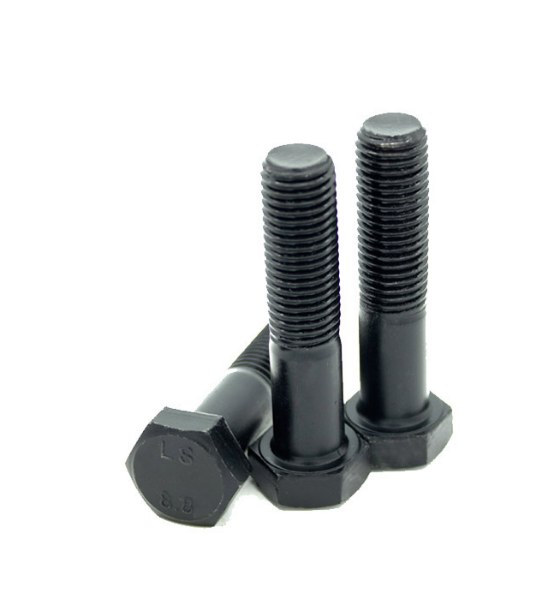
When a procurement engineer orders carbon-steel fasteners, the question of coating almost always comes up before the order is placed. The base steel itself offers essentially no corrosion resistance — left bare, a hex bolt will start to show red rust within days outdoors and within weeks indoors in a humid environment. The coating is what makes the part usable in the real world. The three options most buyers compare are electro-zinc plating, hot-dip galvanizing and Dacromet, and they are not interchangeable: each behaves differently in salt spray, in torque-tension, in dimensional tolerance, and in cost.
This guide walks through what each coating actually is, where it fits, and how to pick the right one for your application.
Electro-zinc plating (and zinc-flake variants)
Electro-zinc plating — sometimes just called "zinc plated" or "zinc" in supplier catalogues — is the default finish on most carbon-steel fasteners. The parts are submerged in a zinc salt solution and an electric current deposits a thin, uniform zinc layer onto the steel, typically between 5 µm and 25 µm depending on the service condition specified (ISO 4042 groups these as "non-passivated", "passivated" and "passivated plus top coat").
The main advantages of electro-zinc are dimensional accuracy, appearance and cost. Because the coating is thin and even, external threads and fine tolerances are not disturbed, so the same part can still meet ISO metric thread gauges after plating. A clear or yellow chromate conversion film is usually added on top, which gives the characteristic blue-bright or yellow-gold finish and adds a few hours of salt-spray protection.
Typical performance:
- Salt spray (neutral, ISO 9227): around 48 to 96 hours to white rust, depending on passivation
- Service temperature: roughly −40 °C to +200 °C before the chromate film breaks down
- Cost: the lowest of the three options
- Hydrogen embrittlement risk: yes, on hardened parts above ~1000 MPa tensile strength — baking after plating is required
For indoor assemblies, electrical enclosures, and general machinery where corrosion exposure is mild, electro-zinc is the right default. It is also the only one of the three that consistently holds tight thread gauges on small metric sizes (M3 to M8).
Hot-dip galvanizing (HDG)
Hot-dip galvanizing is a fundamentally different process. Cleaned fasteners are dipped into a bath of molten zinc at roughly 450 °C, and a metallurgical bond forms between the zinc and the steel. The result is a much thicker, much rougher coating — typically 50 µm to 100 µm — that is genuinely alloyed to the surface, not just sitting on top of it.
The trade-off is unambiguous. Hot-dip galvanizing gives far better corrosion resistance than electro-zinc — neutral salt-spray results are typically 500 hours and up, and outdoor service life in normal atmospheric conditions is often measured in decades rather than years. The cost is also higher (the zinc bath, energy, and slower line speed), but the unit price premium is usually modest when the order is in volume.
The downside is dimensional. A 50–100 µm zinc layer is the same order of magnitude as a thread tolerance on a small bolt, so hot-dip fasteners almost always need to be tapped or re-threaded after galvanizing, and standard ISO metric threads are not guaranteed. For the same reason, HDG is rarely used on sizes below M8, and never on precision screws with class-6g tolerances.
Typical applications: outdoor steel structures, guardrails, transmission towers, solar racking, agricultural machinery, anywhere the fastener will sit in atmospheric exposure for years.
Dacromet (zinc-flake / base-coat plus top-coat)
Dacromet is the trade name most commonly used; the underlying technology is a zinc-flake base coat with a chromate-free inorganic top coat, applied by dip-spin or spray and then cured at ~300 °C. There is no electric current and no molten bath, so the substrate never reaches liquid-phase temperatures and there is essentially no hydrogen embrittlement — which makes Dacromet the standard choice for 10.9 and 12.9 grade high-strength fasteners (see our guide to reading bolt strength grade markings for what those grades actually require).
The coating is thin — typically 5 µm to 15 µm — but it is densely packed with overlapping zinc and aluminium flakes, which is what gives it its corrosion performance: typical neutral salt-spray ratings of 500 to 1000+ hours to red rust, comparable to or better than hot-dip galvanizing, in a much thinner layer. The trade-off is abrasion resistance (zinc-flake is softer than alloyed HDG and can mark in handling) and cost — Dacromet is usually the most expensive of the three options per part, especially on small sizes.
Typical applications: wind turbine fasteners, chassis bolts, structural assemblies, fasteners that must pass hydrogen-embrittlement testing, and increasingly any 10.9 / 12.9 grade bolt that has to keep its mechanical properties after coating.self-tapping screw guide walks through how the tip geometry interacts with the coating when fastening into thin sheet.
Conclusion
There is no universally "best" fastener coating. Electro-zinc is the right default for indoor use and tight-tolerance parts; hot-dip galvanizing is the right choice for long-term outdoor exposure where thread tolerance can be relaxed; Dacromet is the right choice for high-strength bolts and any application where hydrogen embrittlement is a concern. The most common procurement mistake is picking the cheapest coating and then discovering a year later that it was the wrong coating for the environment — or, conversely, paying for Dacromet on a low-grade bolt that will never see enough stress to need it.
NXHD Manufacturing (contact@nxhdmfg.com) is a precision fastener and custom metal parts manufacturer with dual production bases in Handan and Datong, China. We supply standard and non-standard fasteners to OEM customers across Europe, the Americas and Asia.
Key takeaways
- Electro-zinc plating is the default finish for indoor carbon-steel fasteners: thin, accurate, low cost, but limited corrosion protection and hydrogen-embrittlement risk on high-strength parts.
- Hot-dip galvanizing gives the longest atmospheric corrosion life, but the thick zinc layer (50–100 µm) means standard ISO metric threads are not guaranteed after coating.
- Dacromet (zinc-flake) is the standard coating for 10.9 and 12.9 grade bolts because it does not introduce hydrogen embrittlement, and it offers salt-spray performance comparable to HDG in a much thinner layer.
- Match the coating to the environment, the strength grade and the thread tolerance — those three constraints decide the right finish in almost every case.
Frequently asked questions
Which fastener coating is best for outdoor use?
Hot-dip galvanizing and Dacromet are both well suited to outdoor exposure. Hot-dip galvanizing (HDG) is the lower-cost option for general atmospheric exposure and is the usual choice for steel structures, guardrails and solar racking. Dacromet is preferred where thread tolerance must be preserved or where the fastener is a high-strength grade (10.9 / 12.9) that cannot tolerate hydrogen embrittlement.
Is zinc plating safe for 10.9 and 12.9 grade bolts?
Zinc plating can be used on 10.9 and 12.9 grade bolts only if a proper post-plating bake is performed to drive out absorbed hydrogen. For most OEM buyers the simpler and safer choice is Dacromet or a zinc-flake coating, which does not introduce hydrogen in the first place. NXHD's standard practice for high-strength bolts is to default to Dacromet or zinc-flake rather than electro-zinc.
What salt-spray rating should I require for my application?
For indoor or sheltered use, 48 to 96 hours of neutral salt spray (ISO 9227) to white rust is usually sufficient. For general outdoor use, 240 to 500 hours is a common specification. For marine or coastal environments, 1000 hours and above is typical, and that level is generally reached only by thicker HDG, Dacromet or stainless steel.
How does fastener coating affect thread fit?
Electro-zinc and Dacromet are thin enough (typically under 25 µm) that standard ISO metric threads still gauge correctly. Hot-dip galvanizing is much thicker (50 to 100 µm) and will not hold standard ISO metric thread tolerance without special measures; HDG parts are usually produced oversize or re-threaded after coating, and standard ISO thread fit cannot be assumed on small sizes.
What is the cost difference between zinc, HDG and Dacromet?
As a rough rule of thumb, electro-zinc is the lowest cost, hot-dip galvanizing is moderately higher, and Dacromet is the highest of the three. The actual premium depends on part size, batch volume and local energy and chemistry costs, but the ordering is consistent across most regions. For low-corrosion applications the extra cost of HDG or Dacromet is rarely justified; for outdoor or high-strength applications the extra cost is almost always worth it.
Can NXHD supply fasteners with any of these coatings?
Yes. NXHD Manufacturing supplies carbon-steel standard fasteners, non-standard parts and special-shaped fasteners with electro-zinc, hot-dip galvanizing and Dacromet finishes, and can provide salt-spray test reports on request. Contact contact@nxhdmfg.com with your drawing and service environment for a quotation.