 contact@nxhdmfg.com
 +86 352 5330772
 +86 180 3528 0246

Ask for a quote on a custom machined part and three numbers usually surprise the buyer: a minimum order quantity, a tooling line item, and a lead time measured in weeks rather than days. None of them is arbitrary. All three come from the fixed cost of setting up a machine, and knowing where each one comes from is the fastest way to reduce it. This article explains what MOQ, lead time and tooling cost actually represent on a CNC project, which parts of each are negotiable, and which design decisions move them.
What "custom" actually means in a machining quotation
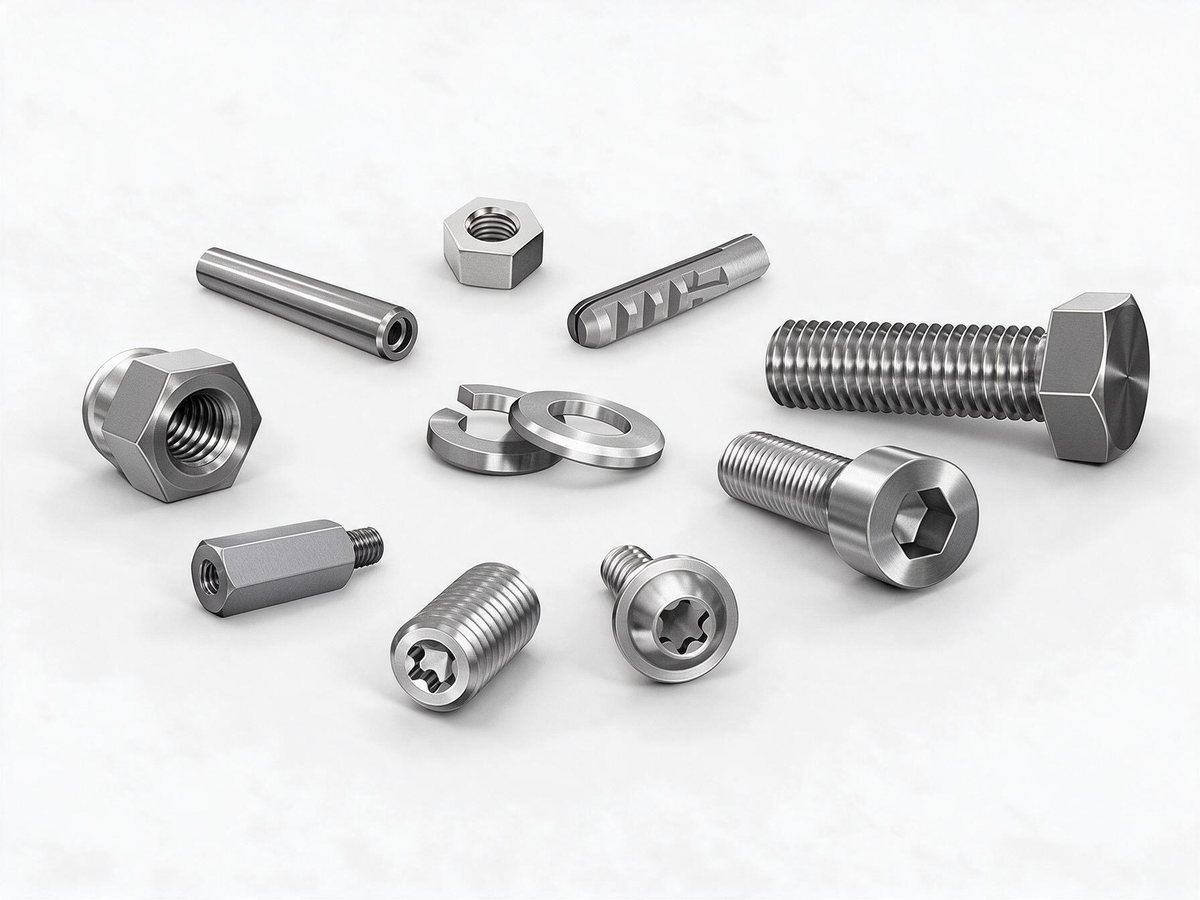
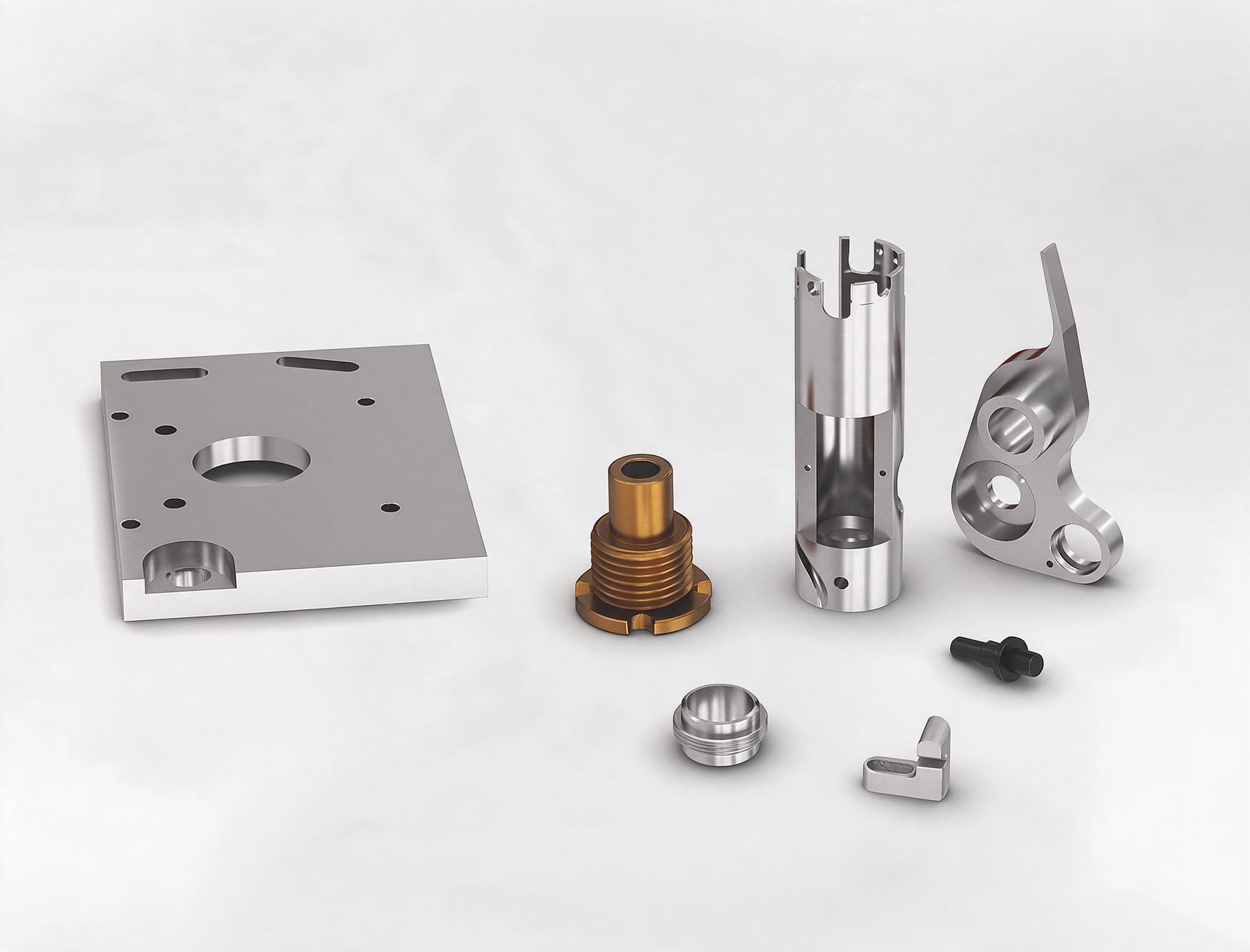
A part is custom when it cannot be produced from stock tooling and existing setups, and that definition is broader than most buyers expect. A hex bolt to DIN 931 is standard. The same bolt with a non-standard shank length, an unusual thread pitch, a shoulder, a cross-hole or a special head geometry is not, because each of those features requires a dedicated tool path or fixture.
This spectrum runs from standard fasteners through non-standard parts and special-shaped parts to fully bespoke machined components. The closer your drawing sits to the bespoke end, the more of the quotation is setup rather than material. For small precision components you are usually buying machine time and setup time rather than metal, and the two behave very differently as quantity changes.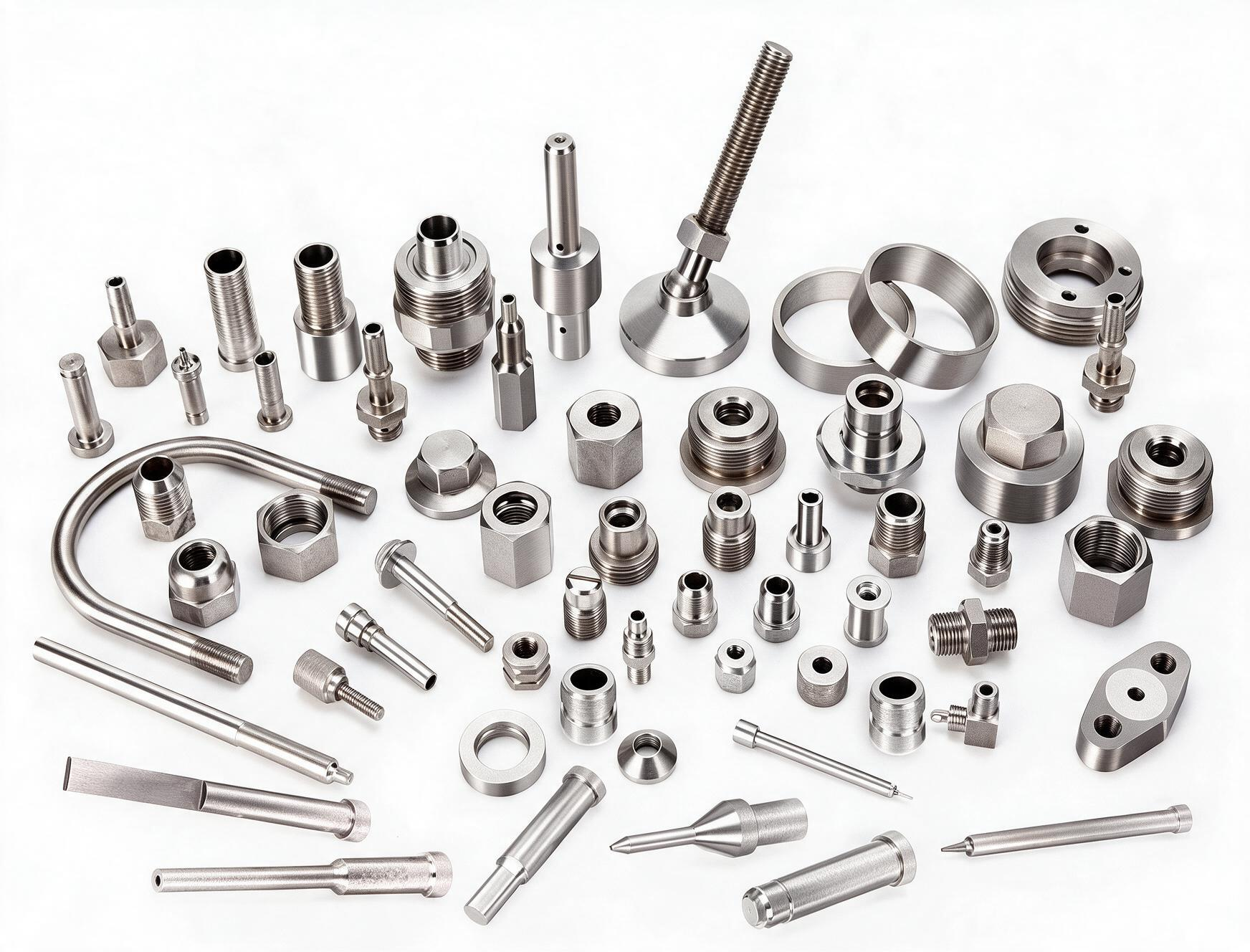
How lead time is really built up
The quoted lead time is not the time the machine spends cutting. It is the sum of four phases, and only the last one is visible on the shop floor.
The first is quotation and technical clarification: ambiguous tolerances, unspecified finishes or missing material grades generate questions, and every round adds days. The second is material procurement, short for common steels and aluminium alloys but potentially the longest line in the schedule for certified or special alloys. The third is programming, fixturing and first-article inspection. The fourth is production, often the shortest of the four for small parts.
This is why two orders of the same part can carry very different lead times. If material is in stock and the program exists from a previous run, lead time collapses to production plus inspection. On a first run with certified raw material, all four phases run in sequence.
Buyers compress the first phase by sending complete drawings: material grade, heat treatment, critical dimensions with tolerances, thread standard, surface finish and coating. For fastener-type parts the thread standard matters most, because metric and inch series are not interchangeable and the difference is usually discovered at assembly. Our article on reading and specifying metric and inch threads covers this in detail.
What tooling charges actually pay for
Tooling charges are the most frequently disputed line on a machining quotation, mostly because the word covers several different things.
Cutting tools are consumables, normally absorbed into the machine-hour rate rather than billed separately. Fixtures and jigs are the opposite: a purpose-built fixture or dedicated soft-jaw set is a real manufactured item with its own material and labour cost, and it belongs to you even though it stays at the supplier for future runs. Gauges fall in the same category, and threaded parts usually require go/no-go gauges sized to your specific thread.
The practical question is not whether tooling exists but whether it is dedicated or shared. A part held in a standard vice with soft jaws and measured with standard micrometres and thread gauges carries little or no tooling charge. One that needs a bespoke fixture or a custom profile gauge carries a genuine one. Designing for standard workholding and standard measurement is the cheapest tooling decision available, and it is made on the drawing board, not in negotiation.
Where volume does not justify dedicated fixturing, compare the machined route against a near-net-shape one. Casting followed by finish machining removes most material removal and can change the economics of the part above a few hundred pieces; our comparison of lean casting and CNC machining covers the break-even logic.
Reducing unit cost without reducing quality
The highest-leverage cost reductions are all design-side, and none of them requires accepting a worse part.
Tolerances are the first place to look. A general tolerance on non-critical features instead of a tight one reduces machining passes, inspection time and scrap. Specify tight tolerances only where function demands them. Material is the second: a free-machining grade can cut cycle time significantly on high-volume turned parts, so the grade should be chosen for machinability as well as service properties. Feature count is the third: every additional hole, pocket, undercut or thread is another tool, another setup and another inspection step.
Quantity is the fourth. Because setup is fixed, the unit price curve is steep at low quantities and flattens quickly, so asking for two or three quantity breaks in one enquiry costs nothing and often reveals a step worth ordering into. Consolidating similar parts into one order works the same way, since setups can sometimes be reused across a family.
Finally, plan the inspection route early. Agreeing what will be measured, against which sampling plan and with what acceptance criteria before production starts avoids a batch that passes the supplier's checks and fails yours. For fastener-type parts, our guide to incoming inspection sets out a workable sampling approach and the defects that matter.
Conclusion
MOQ, lead time and tooling are three views of the same fact: a machined part carries a fixed cost that must be recovered before any variable cost becomes visible. Buyers who understand which parts of that cost are real and which are scheduling artefacts get better prices and shorter deliveries, not by negotiating harder but by sending complete drawings, choosing standard workholding, specifying tolerances where they matter and ordering into quantity breaks. Most of the cost of a custom part is decided before the enquiry is sent.
Key takeaways
- Setup cost is fixed and machining cost is variable; MOQ is simply the quantity at which the fixed setup share stops dominating the unit price.
- Quoted lead time is four phases in sequence (clarification, material, programming and first article, production), and only the last is machine time.
- Tooling charges are real when the fixture or gauge is dedicated to your part; designing for standard workholding and standard measurement removes most of them.
- Tight tolerances, exotic materials and additional features each add tooling, cycle time and inspection; specify them only where function requires.
- Always request several quantity breaks in one enquiry, and plan the inspection route before production rather than after.
Frequently asked questions
What is a typical MOQ for custom CNC machined parts?
There is no universal number, because MOQ depends on how much dedicated setup the geometry requires rather than on the part size. Simple turned parts that run on standard tooling and modular workholding can be economical at low double-digit quantities, while parts needing a bespoke fixture usually carry a higher minimum. The practical approach is to ask for quotes at two or three quantity breaks so you can see where the unit price step actually falls.
Why is the unit price so much higher for 50 pieces than for 500?
Because the programming, fixturing and first-article prove-out cost is essentially the same for both orders, and at 50 pieces it is divided by ten times fewer parts. The machining time per piece is identical; only the amortised setup share changes. This is also why the price curve flattens as quantity rises rather than falling linearly.
How can I reduce the tooling cost on a new machined part?
Design the part so it can be held in standard workholding and verified with standard measuring equipment, and avoid features that require custom fixtures or profile gauges. Specifying standard thread forms, standard tolerances on non-critical dimensions, and readily available material grades all reduce the amount of dedicated tooling needed. Where volume justifies it, a cast near-net-shape blank can also remove machining operations entirely.
Which standards apply to custom machined parts and their threads?
Dimensional tolerancing normally follows ISO 2768 for general tolerances unless the drawing states otherwise, with ISO 286 (or ASME B4.1 in inch-series drawings) governing fits. Threads should be called out to a specific standard: ISO 68-1, ISO 261 and ISO 965 for metric threads, or ASME B1.1 for Unified inch threads. Naming the standard on the drawing is the cheapest way to avoid a metric and inch mismatch at assembly.
What information should I include in an RFQ to get an accurate quote and lead time?
Send a complete drawing with material grade, heat treatment, all critical dimensions and tolerances, thread standard, surface finish and any coating specified, plus the target quantity and required delivery. Including two or three quantity breaks lets the supplier show where the price steps are. Missing tolerances and unspecified material grades are the two most common causes of quotation delays.
Does NXHD Manufacturing handle both standard and custom machined parts?
Yes. NXHD Manufacturing supplies standard fasteners alongside non-standard parts, special-shaped parts and custom CNC machined components, operating dual production bases in Handan and Datong, China. The Handan base sits within one of China's largest fastener clusters, while the Datong base covers machining and casting, so both standard and bespoke items can be quoted from the same enquiry.
NXHD Manufacturing (contact@nxhdmfg.com) is a precision fastener and custom metal parts manufacturer with dual production bases in Handan and Datong, China. We supply standard and non-standard fasteners to OEM customers across Europe, the Americas and Asia.