 contact@nxhdmfg.com
 +86 352 5330772
 +86 180 3528 0246
A designer starting a new small metal part usually has two viable routes: cut it from bar or plate on a machining centre, or cast it close to final shape and machine only the features that have to be accurate. For small OEM parts the choice is rarely about capability — both processes hold tolerances most mechanical designs live with comfortably. It is about where the money goes. Casting front-loads cost into tooling and repays it through a low unit price; machining carries almost no tooling but charges for every minute of spindle time and every gram turned into chips. Here is how to make that choice defensible on the drawing.
What each process actually does
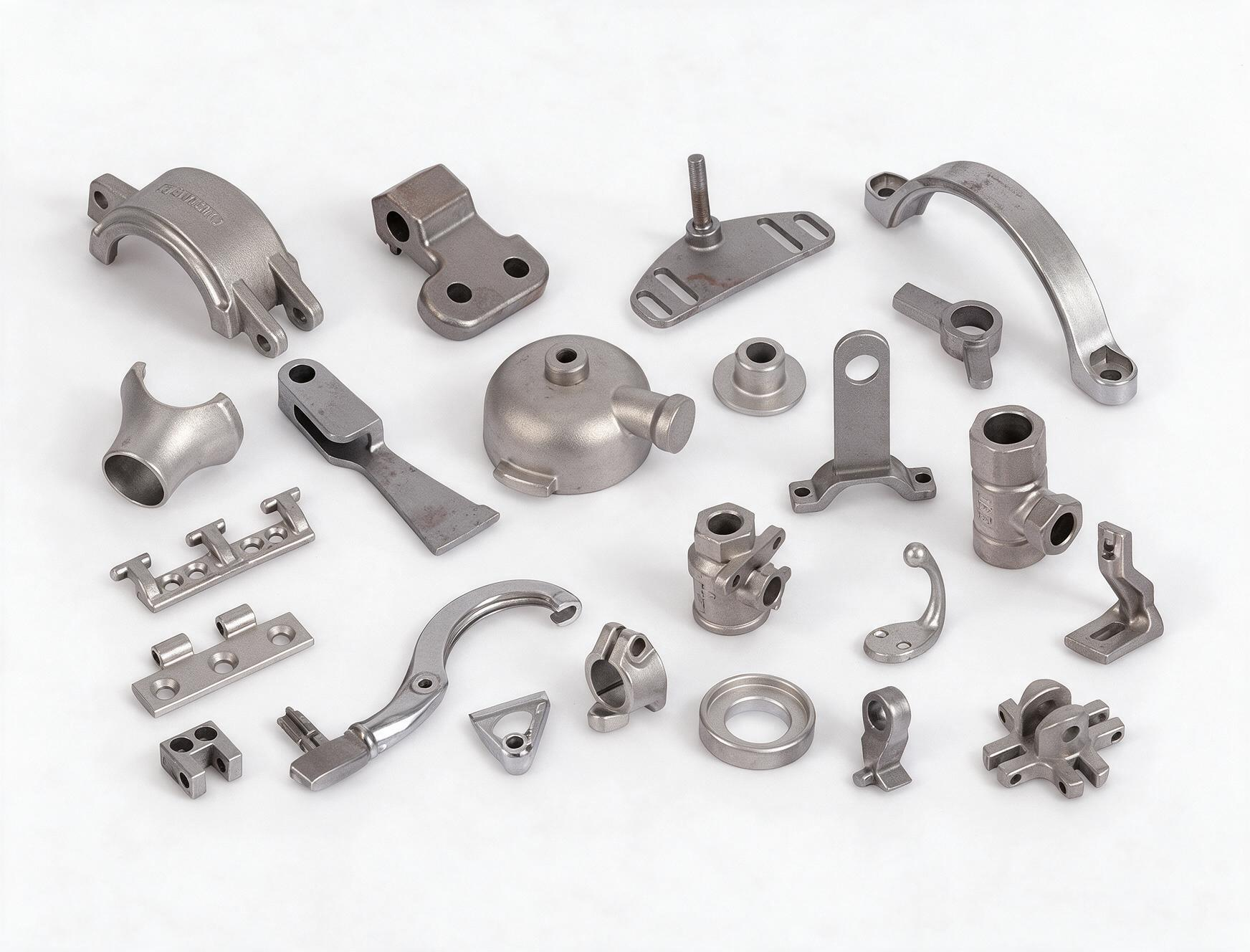
Lean casting covers the near-net-shape casting processes — investment (lost-wax) casting, shell moulding and precision sand casting — that produce a part close to finished geometry with a deliberately small machining allowance rather than a block of solid metal. A wax or resin pattern forms the cavity, metal is poured, and the outer profile, ribs, bosses, radii and often internal passages come out already formed. Only surfaces needing tight tolerance or a fine finish are machined afterwards. The attraction is material yield: metal that is never removed is never paid for twice, once as stock and once as spindle time.
CNC machining is subtractive and starts from bar, plate or a rough casting. It has essentially no tooling cost, changes are made by editing a program rather than cutting new tooling, and it delivers the tightest tolerances and best surface finish of any common production process. Its cost scales with the volume of material removed, the number of setups and the precision demanded. Complexity is paid for directly: a part with many features is a part with many tool paths.
The practical consequence: casting pays for geometry, machining pays for precision.
The cost structure, and where the break-even sits
Three numbers decide most of these projects.
The first is tooling. Casting requires a pattern or die, and usually a machining fixture afterwards, and that cost is incurred before the first good part exists. Machining needs only a program and whatever workholding the part requires, so first-article cost is low and small quantities almost always start on a machine.
The second is unit cost at volume. Once the casting tool exists, unit price is dominated by metal weight, yield and cleaning rather than feature count, so a complex cast shape can cost little more per piece than a simple one. Machining moves the opposite way: unit cost tracks cycle time, so complexity is paid for on every part.
The third is annual volume and expected life. The break-even sits where the amortised tooling cost per part falls below the machining saving per part, so for parts made in recurring batches over several years, casting usually wins beyond prototype scale, while one-offs and low volumes belong on a machine.
Two items are routinely underestimated. Secondary operations — nearly every casting needs machining, deburring or tumbling — mean the fair comparison is "cast plus finish" against "machine from solid". And a design change after tooling is cut is expensive on a casting, while a machined part simply gets a new program revision.
Tolerance, surface and the hybrid route
As-cast tolerances are much wider than machined tolerances and vary with alloy, wall thickness, section transitions and part size. Casting also brings process requirements the designer must plan around: draft on surfaces that have to release from the mould, radiused rather than sharp internal corners, and a finish that is functional but not decorative. Porosity is inherent to some degree, which is why castings that see pressure, fatigue or safety-critical load are normally specified with a defined inspection requirement rather than assumed sound.comparison of zinc plating, hot-dip galvanizing and zinc-flake coatings covers how the common finishes behave on carbon steel parts.
A short decision checklist
Before releasing a drawing, answer these in order.
Does the part need geometry that is expensive to cut — ribs, bosses, curved profiles, internal passages, weight-saving pockets? If yes, casting is worth pricing.
Is the volume recurring, or is this a prototype or one-off requirement? One-offs go on a machine.
Which dimensions matter functionally, and can they be produced by machining a cast blank rather than the whole part? If most of them can, a hybrid part usually beats both extremes.
Will the design change after tooling is committed? If the geometry is still fluid, machining buys the freedom to keep changing it — the same argument made at component level in our guide to standard versus non-standard fasteners.
What is the total delivered cost, including secondary operations, inspection and any weight saving? A lighter cast part can also cut freight and handling costs, which rarely appear in a unit-price comparison.
Conclusion
For small OEM metal parts, lean casting and CNC machining are two ways of paying for a part. Casting pays up front for tooling and then buys geometry and material yield cheaply on every subsequent piece; machining pays nothing up front and charges for precision and changeability on each part. The decision follows from three facts: how complex the shape is, how much of it genuinely needs machined accuracy, and whether the volume will recur. Answer those, and the hybrid route — cast the form, machine the function — frequently proves the most cost-effective answer in the small-to-medium size range. Where strength-critical threaded features are involved, grade and marking requirements still apply, as set out in our guide to bolt strength grade markings.
NXHD Manufacturing (contact@nxhdmfg.com) is a precision fastener and custom metal parts manufacturer with dual production bases in Handan and Datong, China. We supply standard and non-standard fasteners to OEM customers across Europe, the Americas and Asia.
Key takeaways
- Casting pays for geometry; machining pays for precision. Lean casting front-loads tooling cost and returns a low unit price, while CNC has almost no tooling and charges for spindle time on every part.
- Compare "cast plus finish" against "machine from solid" — nearly every casting needs some secondary machining, deburring or tumbling.
- The most common route for small OEM parts is hybrid: cast the parent form and machine the functional features such as bores, threads and sealing faces.
- As-cast tolerances are wider, draft and corner radii are process requirements, and porosity should be managed by a stated inspection requirement rather than assumed.
- Fix the datum strategy, machining allowance, as-cast versus machined surfaces and heat treatment before requesting a quotation — most dimensional problems originate in the drawing.
Frequently asked questions
What is lean casting?
Lean casting describes near-net-shape casting processes — investment casting, shell moulding and precision sand casting among them — that produce a part close to its finished geometry with only a small machining allowance. Rather than machining a part from solid stock, the shape is formed in a mould and only tight-tolerance features are subsequently machined, which improves material yield and reduces spindle time.
Is casting cheaper than CNC machining for small metal parts?
It depends on volume and shape complexity rather than on part size alone. Casting carries a tooling cost up front but a lower unit price once that tooling is amortised, so it typically becomes the cheaper route for small parts with complex geometry produced in recurring batches. For prototypes, one-off parts and very low volumes, CNC machining is normally cheaper because there is no tooling to pay for.
Can a cast part hold the same tolerances as a machined part?
Not on as-cast surfaces — casting tolerances are wider and vary with alloy, wall thickness and part size. However, the features that matter functionally can be machined after casting, which means a hybrid cast-and-machine part can hold the same tolerances on critical dimensions as a fully machined part. The drawing should distinguish as-cast surfaces from machined ones so both are priced and inspected correctly.
What is the typical machining allowance on a lean casting?
Allowance has to be large enough for the machined surface to clean up despite the as-cast tolerance, and small enough not to waste metal or cycle time. It is normally agreed between the foundry and the machining supplier for each surface, based on part size, section thickness and whether the face is flat or contoured, rather than specified as a single default figure on the drawing.
Which standards apply to cast and machined metal parts?
Casting is usually specified through material standards rather than a single product standard — for example ASTM A351 and ASTM A743 for stainless steel investment castings, EN 10213 for steel castings, and GB/T 2100 for the Chinese market. Machined dimensions are governed by the drawing's own tolerance scheme, commonly ISO 2768 for general tolerances and ISO 8015 for the GPS principle, with GD&T as defined in ASME Y14.5 where a North American drawing convention applies.
Does NXHD Manufacturing supply lean casting components and machined parts?
Yes. NXHD Manufacturing supplies lean casting components, custom and special-shaped parts, CNC machined parts and standard fasteners from its dual production bases in Handan and Datong, China, the latter of which opened in 2025. Send your drawing, material, annual volume and any inspection requirement to contact@nxhdmfg.com for a quotation.