 contact@nxhdmfg.com
 +86 352 5330772
 +86 180 3528 0246
A nut is the cheapest part in a bolted joint and the easiest one to specify badly. Put a hex nut on a joint that an operator needs to open by hand every week and the assembly suffers; put a wing nut on a joint that has to hold a defined preload and the joint fails quietly. This article compares the two on the characteristics that actually drive a specification decision — load capacity, torque behaviour, tightening method, standards, materials and cost — and closes with a decision path you can apply to a live bill of materials.
What a hex nut is actually doing in a joint
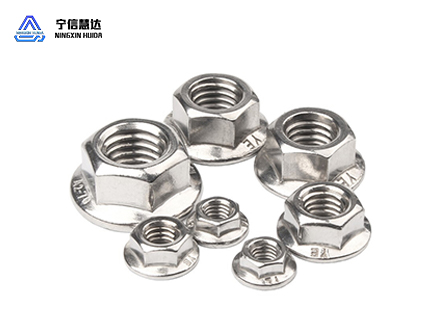
A hex nut exists to develop and hold a clamping force in the bolt. The six flats are not a stylistic choice; they are the interface that lets a wrench or socket apply controlled torque to the assembly, so the bolt stretches and the joint closes.
That is why nut dimensions are specified separately from bolt dimensions. Nut height and thread engagement length are set so that the nut's threads do not strip before the bolt breaks, which keeps the failure mode predictable and inspectable. The common specifications are ISO 4032 for style 1 hex nuts, ISO 4033 for the taller style 2, ASME B18.2.2 in the inch series, and GB/T 6170 in China. DIN 934 is still written on many older drawings and corresponds closely to style 1.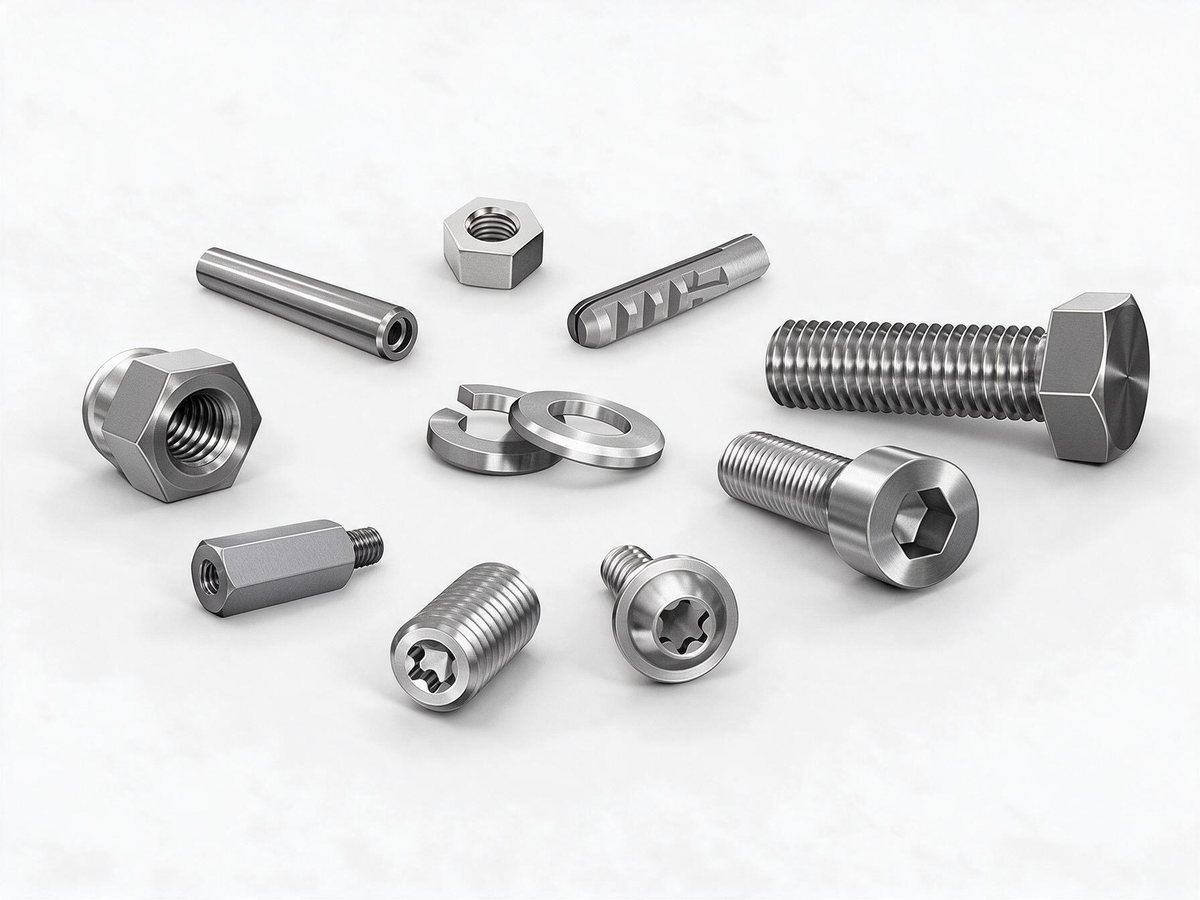
Torque, load capacity and the failure mode you should expect
The clearest way to compare the two is to ask what fails first.
With a hex nut, the controlled failure mode is thread stripping. Nut height and material grade are set so that stripping occurs, if at all, after the bolt has already reached its proof load — which is why the nut grade must match the bolt grade. This makes the joint calculable: you can look up a proof load, apply a torque figure, and know what you are getting.
With a wing nut, the controlled failure mode is wing deflection. Long before the threads are at risk, the wings bend, the effective grip drops, and the achievable preload flattens out. The result is a joint that feels tight and is not. No useful structural torque table exists for a wing nut, and reputable suppliers will not publish one.
The working rule is short. If the joint has to hold a specified preload, tolerate vibration, or carry structural load, use a hex nut — with a prevailing-torque insert or all-metal locking feature if the joint is dynamic. If the joint has to be opened and closed by hand, repeatedly, at low load, and accessibility matters more than clamping force, a wing nut is the correct and cheaper answer.
Materials, coatings and the standards picture
Hex nuts are supplied in carbon steel to ISO 898-2 property classes 8, 10 and 12, matched to bolt classes 8.8, 10.9 and 12.9. Stainless hex nuts come in A2 and A4 grades, with A4 preferred for marine, food-processing and chemical environments; brass and nylon nuts cover electrical and low-load applications.
Coating selection follows the same logic as for bolts: electroplated zinc for general indoor duty, hot-dip galvanizing or zinc-flake coatings for outdoor and high-corrosion service, and zinc-nickel where a thin, hard, highly corrosion-resistant layer is required. The coating has to be chosen for the assembly as a whole rather than the nut alone, because a plated nut on a hot-dip galvanized bolt creates a fit and galvanic-mismatch problem. Our fastener surface coatings guide covers the trade-offs in detail.
Wing nuts are usually bought in stainless steel for outdoor hardware or zinc-alloy die casting where loads are trivial. In a corrosive environment, confirm the material rather than assuming stainless from appearance.
A short selection path
Working through five questions resolves most cases:
- Does the joint carry a calculated load or a specified preload? If yes, hex nut. A wing nut should not appear on a drawing that has a torque callout.
- Will the joint be disassembled by hand in service? If yes, wing nut — or a hand knob, which will hold preload better than wings.
- Is there vibration or dynamic load? If yes, use a hex nut with a prevailing-torque feature, or a wing nut plus a locking element for low-load applications only.
- What is the corrosivity of the environment? This drives material and coating before it drives nut type. A4 stainless and a zinc-flake or hot-dip finish are the usual answers for outdoor and marine work.
- What is the assembly error cost? On a high-volume line, an asymmetric part that can be fitted the wrong way round is a defect generator. Hex nuts avoid that class of problem.
Where none of the standard options fit — an unusual thread, an integrated flange, a captive geometry — the sensible route is a non-standard part rather than a compromise on the standard one. It is common in OEM work for buyers to source standard fasteners and non-standard parts from the same manufacturer, so interface dimensions stay consistent across the assembly.
Conclusion
Hex nuts and wing nuts are not competing designs; they solve different problems. Hex nuts are the load-carrying, torque-controlled choice, available in matched property classes to mature standards. Wing nuts are the tool-free access choice, excellent at low load and poor wherever a defined preload matters. Specifying the right one comes down to whether the joint is engineered or operated — and getting that question right at the drawing stage is cheaper than correcting it on the assembly line. Verifying that delivered parts match the specification is the other half of the job, which is where a documented incoming inspection routine and knowledge of bolt and nut grade markings pay for themselves.
NXHD Manufacturing (contact@nxhdmfg.com) is a precision fastener and custom metal parts manufacturer with dual production bases in Handan and Datong, China. We supply standard and non-standard fasteners to OEM customers across Europe, the Americas and Asia.
Key takeaways
- Hex nuts are engineered for controlled torque and predictable proof load; wing nuts are designed for hand operation at low load and should not carry a torque specification.
- Match the nut property class to the bolt class (8 with 8.8, 10 with 10.9, 12 with 12.9) — an under-graded nut converts a predictable failure mode into an unpredictable one.
- A wing nut's limiting failure mode is wing deformation, not thread stripping, so it will feel tight long before it is tight.
- Use prevailing-torque or all-metal locking hex nuts on dynamic and vibrating joints; a wing nut in the same application needs an additional locking element.
- Choose material and coating by environment before choosing nut type, and confirm wing nut material rather than assuming stainless from appearance.
Frequently asked questions
What is the difference between a hex nut and a wing nut?
A hex nut is a torque-driven fastener with six flats for a wrench or socket, dimensioned so its threads do not strip before the bolt reaches proof load. A wing nut is a hand-operated clamping nut whose two wings allow finger tightening only. In short: the hex nut holds a defined preload, and the wing nut holds a part in place.
Can a wing nut replace a hex nut?
Only where the joint carries no calculated load and no torque specification. A wing nut of the same thread size has substantially lower load capacity than a hex nut, and its wings deform at low torque, so it cannot develop or maintain a specified preload. On structural, safety-relevant or vibrating joints, replacing a hex nut with a wing nut removes the engineering basis for the joint.
Which standards cover hex nuts and wing nuts?
Metric hex nuts are normally specified to ISO 4032 (style 1) or ISO 4033 (style 2), with DIN 934 still common on older drawings and GB/T 6170 in China; inch-series hex nuts follow ASME B18.2.2. Wing nuts are specified to DIN 315 in the metric system, with an equivalent inch-series specification. The drawing should name the standard explicitly, since nut height and across-flats width differ between them.
How do I choose the right nut for a vibrating joint?
For a joint that sees vibration or dynamic load, use a hex nut with a prevailing-torque feature — either a nylon-insert nut or an all-metal locking nut — and match its property class to the bolt. Plain nuts loosen under vibration regardless of how tight they were installed, and wing nuts loosen even faster because finger torque cannot generate enough clamp load. A spring washer on a wing nut is a partial mitigation, not a substitute for a locking nut.
Are wing nuts cheaper than hex nuts?
For equivalent thread sizes, wing nut prices vary widely with material and process: die-cast zinc-alloy wing nuts are usually the least expensive, while stainless or machined wing nuts can cost more than a standard hex nut. At volume, plain carbon steel hex nuts are generally the lowest-cost option because they are produced in the largest quantities. The more useful cost comparison is over the assembly's life — a tool-free wing nut that avoids a service visit is often worth more than the price difference.
Does NXHD Manufacturing supply hex nuts and wing nuts?
Yes. NXHD Manufacturing produces standard and non-standard fasteners including hex nuts, flange nuts and locking nuts, in carbon steel, stainless steel and other materials to customer-specified standards and coatings, from production bases in Handan and Datong, China. Buyers needing a matching non-standard or special-shaped part for the same assembly can source both from the same production group.